
Connected Vehicles
The reason you're not driving a BYD in the U.S.
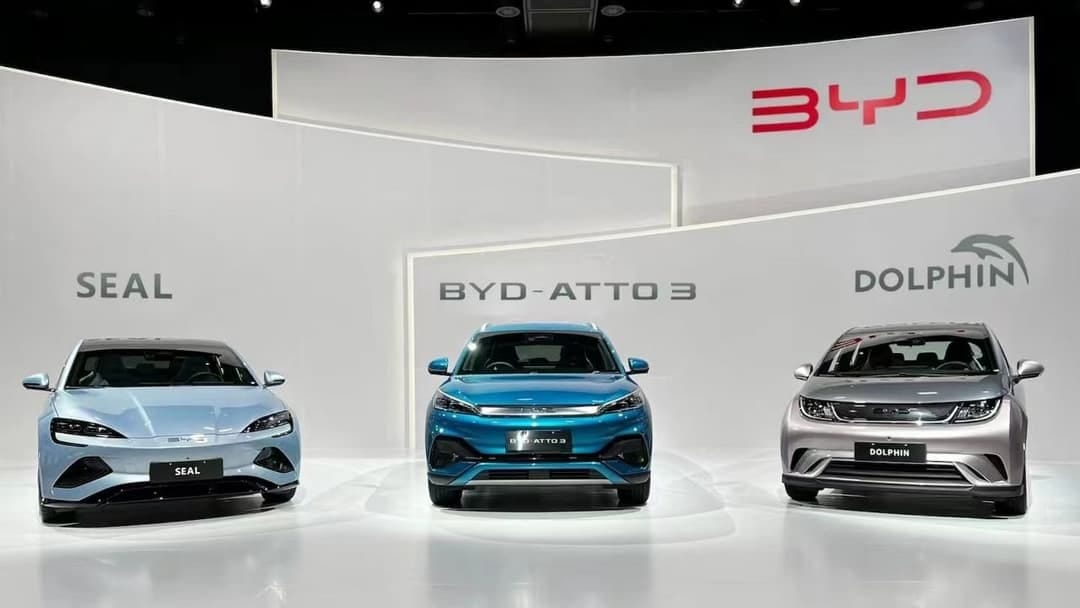
Once again, the war in the Middle East has taken over everything. But prior to the war, there was an uptick in stories about Chinese EV’s potentially coming to the United States. Two major stories led to an increase in the stories.
Canada announced they will allow for the importation of 49,000 Chinese vehicles. Automotive News reports that BYD, Chery, and Geely plan to sell into the market next year.
Ford reportedly discussed partnering with Xiaomi, the Chinese tech and auto company, through a joint venture to produce vehicles in the U.S. Additionally, Jim Farley, the CEO of Ford, talked to the Trump Administration about “Chinese carmakers partnering with US companies through joint ventures in which the American company holds a controlling stake” to build vehicles in the U.S.
Are Chinese vehicles coming to America?
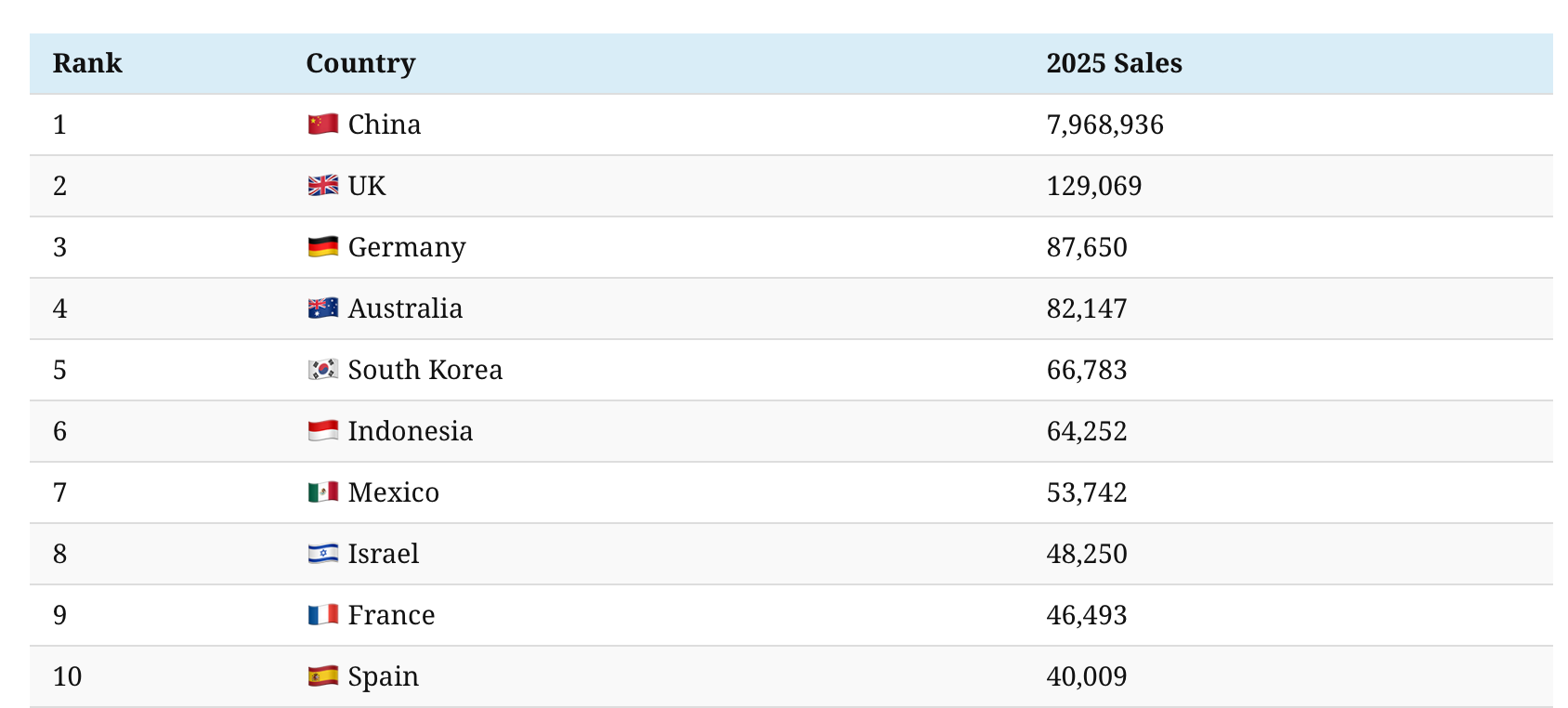
As I have written before, most Americans do not realize the rise in Chinese electric vehicles. They are taking over the world and the U.S. is a major outlier. Chinese automakers exported 2.6 million electric vehicles in 2025, a 104% increase compared to 2024. As the vehicles are prohibited in the U.S., Chinese vehicles accounted for nearly 90% of all EV sales in Mexico 2025. Why? They are excellent vehicles that come at an excellent price.
Chinese EV Sales - 2025
The closest most Americans will get to driving a Chinese EV is if they drive a Volvo or Polestar - they are owned by Geely, a Chinese auto company.
And despite recent reports, that will not change any time soon.
One major impediment (and the one most people assume) is tariffs - the Biden Administration placed 100% tariffs on Chinese EVs in 2024 and the Trump Administration has continued those tariffs. However, Chinese brands could manufacture in the U.S. or in a lower tariff jurisdiction, like Brazil or Thailand. There are also safety standards that would require additional domestic investment, but they are not prohibitive.
Instead, the largest impediment is a government regulation from the Department of Commerce finalized during the final days of the Biden Administration and continued during the Trump Administration.
What is the Connected Vehicle Rule?
At the very end of the Biden Administration, the Bureau of Industry and Security (BIS) at the Department of Commerce released the final rule entitled “Securing the Information and Communications Technology and Services Supply Chain: Connected Vehicles.” The rule states
BIS prohibits transactions involving Vehicle Connectivity System (VCS) hardware and covered software designed, developed, manufactured, or supplied by persons owned by, controlled by, or subject to the jurisdiction or direction of the People's Republic of China, including the Hong Kong Special Administrative Region and the Macau Special Administrative Region, (PRC); or the Russian Federation (Russia).
It should be noted that BIS went through a long rule making process with ample public comments. They did not just hastily drop the rule before Trump came in. They went through a long process.
“Connected” means they have onboard hardware and software systems to “communicate via dedicated short-range communication, cellular telecommunications connectivity, satellite communication, or other wireless spectrum connectivity with any other network or device.”
In plain speak - Your car, and especially new high-tech EVs, are as much a computer as they are an automobile. And just as there are cyber security risks with your computer, phone, or other tech, there could be security concerns with your vehicle.
As Commerce states in the final rule, “Today's vehicles contain a myriad of connected components that provide greater convenience for consumers and increase road safety for both drivers and pedestrians, such as Wi-Fi, Bluetooth, cellular, and satellite connectivity.” Examples of this connection include access to vehicle data or services that allow for vehicle updates. The goal of the technology is to make it easier for automakers to collect information about the vehicles or improve them. But they can also create security risks.
Why is this a big deal?
Once again, from the Department of Commerce
“PRC and Russia are able to leverage domestic legislation and regulatory regimes to compel companies subject to their jurisdiction, including carmakers and their suppliers, to cooperate with security and intelligence services. Such control over companies and their products and services means that their equipment is easily exploitable by PRC and Russian authorities. The privileged access that the PRC and Russia may gain to connected vehicles through their components, including software and hardware, could enable those foreign adversaries to (1) exfiltrate sensitive data collected by connected vehicles and (2) allow remote access and manipulation of connected vehicles driven by U.S. persons.”
In plain speak - the U.S. government is worried that Chinese companies will be forced to share information a vehicle collected with the Chinese government or allow for the Chinese government to remotely access (potentially shut down) vehicles. This could include everything from collecting information about military bases when a vehicle drives on it to the extreme scenario where they hypothetically take control of the vehicles and cause serious damage.
What does the Rule prohibit?
The final rule prohibits the following
“VCS hardware importers from knowingly importing into the United States certain hardware for VCS”
“Connected vehicle manufacturers from knowingly importing into the United States completed connected vehicles incorporating covered software”
“Connected vehicle manufacturers from knowingly selling within the United States completed connected vehicles that incorporate covered software”
When the hardware or software is (and here comes the important part) “designed, developed, manufactured, or supplied by persons owned by, controlled by, or subject to the jurisdiction or direction of the PRC or Russia” AND “prohibits connected vehicle manufacturers who are persons owned by, controlled by, or subject to the jurisdiction or direction of the PRC or Russia from knowingly selling in the United States completed connected vehicles that incorporate VCS hardware or covered software”
The software ban comes into effect for Model Year 2027 and hardware ban is for Model Year 2030.
In plain speak - A modern vehicle cannot be imported into the United States if it was produced by a Chinese company, even if it was built outside of China. But also, if a Chinese EV company wanted to manufacture in the U.S., they would be required to use software and hardware that is separate from their normal vehicles.
Cut to the chase…will I ever be able to drive a BYD or Xiaomi in the United States?
Today, the answer is no. The connected vehicle rule does not allow for it. And I think the answer will be no for a while.
The most likely scenario is what Ford laid out to the Trump Administration - you end up driving a vehicle that is built through a joint venture between an American and Chinese brand. But even then, I think that is a long ways off.
Because there is another impediment…politics.
Last week a series of automotive industry groups wrote to President Trump urging the Administration to not allow Chinese automotive groups to manufacture IN the United States. They warn Chinese brands manufacturing in the U.S. would “pose a direct threat to America’s global competitiveness, national security, and automotive industrial base.”
Right now there is no domestic constituency pushing to allow for Chinese automakers into the U.S. Sure, people hear about how Chinese EVs are cool and cheap. But the majority of Americans have not heard of BYD or Xpeng. They do know American brands and know they manufacture in the United States.
So if you’re American or want to drive a BYD, head down to Mexico or head up to Canada next year, and see if you can take a test drive. I think it will be the closest you get.